Wednesday, March 6, 2013

Keeping families together: Stepping Stones project

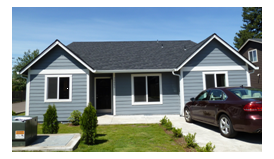
Your gift helped furnish this room
 for a family like Melanie and Bill's
Melanie and Bill are a young married couple with three beautiful children. But addiction, at one point, tore their family apart. Their family was separated when Melanie and Bill’s heroin addiction made the caretaking of their children too difficult. The parents lost custody and were estranged from their children. The judge presiding over their case sentenced them to an outpatient treatment program. Their road to recovery included a very structured and demanding program, but both showed much success. 

As Melanie’s recovery progressed, she was referred to a United Way funded project, Stepping Stones, and was given the opportunity to reunite with her children as she continued her treatment program. She and her children were provided safe and affordable housing through the Stepping Stones project. For nine months she learned parenting and employment skills as she continued her journey to recovery. While living there, one of her children became very ill. Melanie persevered and stayed focused, obtained a job and paid rent at the home despite the added stress. Last summer, she and Bill graduated from their outpatient programs and have since transitioned their entire family into affordable permanent housing.

CODA’s Stepping Stones project provides women and their children with safe and affordable housing as they complete their outpatient treatment programs. Women learn the skills they need to successfully manage their addictions, seek employment, and parent their children through this project. An on-site monitor assists with coordination and support to these women and their families as they rebuild their lives so they can move on through recovery to permanent housing.

Tuesday, March 5, 2013

Dreamer and Doer: Frances Wisebart Jacobs, “Mother of Charities”


March is National Women’s History Month. And at United Way, we have an especially strong connection to the powerful work of women in history. We wouldn't be here today without Frances Wisebart Jacobs, a woman who helped found the organization that became United Way.

Born in 1843 in Kentucky, Jacobs immigrated with her husband to Denver to open a clothing store. She quickly saw the needs in her new home and moved to take action. One of her big, early initiatives was helping tuberculosis (TB) patients get the care they needed.  Hundreds of TB patients moved to Colorado each year for its clean, unpolluted air. But the state didn't have the services to care for them and many ended up homeless, with no choice but to “roam the city coughing and hemorrhaging.”

Jacobs started a volunteer organization that helped them and later advocated for a free TB hospital in Denver. Her passion for change inspired others. The hospital’s research contributed to ending TB as an epidemic.

TB was only one of the issues that Jacobs worked on. She also founded a free kindergarten and a relief society that focused on women in need. In a time when people in poverty were often blamed for their condition or even considered to be a lesser order of human being, Jacobs saw them with empathy and compassion. She understood the connections between the various challenges in her community, saying “God never made a pauper in the world, children come into the world and conditions and surroundings make them either princes or paupers.”

In 1887, Jacobs joined with interfaith Denver leaders to start the Charity Organization Society, which brought together twenty-three charities to coordinate their work. Eventually the organization went nationwide and became United Way and our local branch was founded in 1920.

France Wisebart Jacobs was just one person but her work had a ripple effect that we can still feel today. Many women in our community are creating change and making history. In honor of Women’s History Month, thank you from all of us at United Way.


Sources: Wikipedia, unitedway.org, National Women’s Hall of Fame. Image courtesy Wikipedia.

Monday, March 4, 2013

Donor Spotlight: Carole Bentley

After Carole Bentley survived cancer, she knew she wanted to give back to people who were going through what she had experienced. That passion for helping others drove her to volunteer with the American Cancer Society, where she has worked on events including their gala fundraiser. Fortunately for us, Bentley is also a firm advocate for United Way of the Columbia-Willamette and its mission for our community. She has been donating to United Way for her entire career, more than 35 years. She filled out a pledge form at her very first job at First National Bank, and still gives today as the senior vice president/Commercial Lending Center manager at Banner Bank in Lake Oswego.

Along with her co-workers, Bentley is involved in the United Way workplace giving campaign at Banner Bank. In 2012, Bentley’s branch had the best-ever results for any local Banner Bank — their campaign total more than tripled. That means more money going back to the community to create change. Her advice for anyone involved in running a United Way campaign is to focus on the human aspect and engage with employees. It’s important for potential donors to understand that “someone you know might have been helped by United Way.”

Having lived in the Portland area for many years, Bentley says that what she loves most about this community is that while it has all the resources of a major metropolitan area, it has a small-town feel where everyone knows and supports each other.

Bentley’s worked to make sure that her own values continue in the next generation. She has two sons and taught them from an early age that “when we’re lucky enough to not be hurting, we must help others who are. And, if you can’t give money you can give time.”

Bentley says that she gives to United Way because she loves the fact that 100 percent of her gift goes to help the community. “I like to know where the money goes and I’ve always felt confident that when I give to United Way the money will be used wisely.”

Thank you, Carole Bentley, for your 35 years of giving and creating change in our community. We can do what we do only because of donors like you.

Wednesday, February 20, 2013

Writing Successful Grants: Tips from United Way of the Columbia-Willamette


By Roserria Roberts, Senior Manager United Way Community Impact

We’re currently in the middle of the grant application process for 2013-14 Fiscal Year funding. This blog post provides tips for organizations that are working on their applications now and for organizations that might apply in future funding cycles.

The United Way grant application process is slightly different than traditional grant applications due to the strong ties we build with communities and the target population we serve. We call this the “Community Impact Model.” The process starts with an assessment of our community’s needs and research on the methods and programs that have had the greatest success in combating similar issues, followed by a competitive grant process that funds the most effective projects.  The review and rating is inclusive of non-profits, businesses and community members.  

Here are a few suggestions to help you in building a successful proposal. First, think about the grant application as having three main parts.

Part 1: Provide Your Evidence Review

If you want funding, we need evidence-based information for why your project is needed. A few examples of justification could be: statistics, regional indicators, qualitative or quantitative analysis and/or community data. Supply information on what your community is facing and what you want to address. Furnish details on why the matter is time sensitive, and how the population will continue to be compromised until the matter is addressed.

For insight on what it is we are looking for, carefully read through pages two to nine of the 2013 United Way Community Grant RFP to make sure your project aligns with one or more of the Impact Areas, Funding Priorities and Objectives. And describe how it does so.

Part 2: What Your Project Does

Write your application as though the reviewers are unfamiliar with your work and you are advising them on what your organization does and how it builds a strong community.

When writing about your project, you want people to be inspired. What is your vision? What do you want things to look like when your work is done? Keep in mind this application is for a one-year grant. Don’t get over zealous. Your application should only detail what can be accomplished in one year. Define your strategy for achieving your goals, your objectives (what are the mid-year benchmarks or specific accomplishments you will reach) and when you will accomplish those objectives.

Think about the critical components that make your project unique. Whether that means location, partners, collective approach, activities, etc., make sure they are all included. While you're thinking through this information, keep in mind what you'll need to give the readers in order for them to have a comprehensive view of your work and the activities you'll achieve.

Part 3:  Why Is Your Project Special?

This is where everything is pulled together. Here are a few of the types of questions reviewers may ask. Keep in mind how your answers will appeal to the reader's logical side.
  • What gives your group credibility?
  • Have you had many successes? If so, when?
  • Have you been effective with other projects aligned around this area? 
  • Do you have evidence that past projects were effective?
  • Does your budget make sense and will you have sufficient funds to cover your work?
  • What makes your group unique?
  • What sets your project apart from other agencies in this area?
  • How has the community benefited? 
  • How has the community been involved?
  • How have you empowered participants from prior projects? 
  • What type of sustainability or follow-up will you provide?

Part 4: The Review

Each of the three Impact Areas (Education, Financial Stability and Health and Well-Being) will have 20–30 volunteer reviewers. These reviewers may include people from all four counties, a sprinkling of United Way staff, seasoned United Way volunteers (Vision Council Members), committed stakeholders and content experts. Reviewers are provided with detailed instructions before they start reading, but keep in mind that many may not be familiar with your organization or the population you serve.

Read up on the United Way review process. We have provided several tools that will instruct you on the outcomes we seek. One of the most useful is the reviewer rubric. This is the tool by which your application will be scored. It provides you with information on the elements we are looking for. Learn as much before you start writing and be knowledgeable about how your application will be scored.

Through the quality of your application, convince your readers to support your request for funding. You want your readers to advocate for your project and say, "Out of all the proposals I’ve read, this one presents one of the most compelling cases for United Way dollars and assistance!"


Beyond writing the grant...

1. How realistic is your group about your fundraising plans?

Your budget tells grantmakers how realistic you are about your ability to raise money. Grant reviewers need to feel confident that if your overall project budget is larger than the dollar amount that you are requesting from United Way, you will be able to raise the difference and have a successful project.

Example: If your budget for this year is twice as much as last year and you don’t have a solid fundraising plan to match up with your budget, your overall proposal is not going to look very strong to the reviewers.

Example: If you are a new, grassroots organization that hopes to raise $300,000 in the first year and your fundraising plan is heavily weighed on government dollars, your plan will not come across as realistic.

You need to be as accurate as possible when projecting unsecured dollars or you won’t get funded.

2. How financially stable is your group? 

We want to know:
•    What percent of your budget do you anticipate raising from individuals?
•    How much of your budget is already committed (or at least has been received in the past) and how much is pending?
•    What are the different funding sources you have?

United Way is conscious of the many sizes of agencies and organizations we fund. If you are an emerging or mid-size organization, make sure you are taking the appropriate steps towards becoming more financially stable and that you are working towards diversifying your funding sources. 

3. How well does your budget match your specific plans?

United Way wants to be certain that your income and expenses are reasonable and consistent with the work you described in your narrative. Make sure you answer each budget line item because line items with no narratives will cause points to be taken away.

Example: If you are launching a project that involves low-income parents, be sure to have expenses such as food, childcare and travel included in the budget.

Make sure that your expenses reflect the services you provide in the proposal narrative.

We wish you the best of luck on your application for funding and look forward to reading more about your proposed project!

Special thanks to MRG Foundation whose Resources for Applicants blog inspired this post.

Thursday, February 7, 2013

Spotlight on the Help with the Basics Campaign


Becca and Sun were a newly wedded couple. They were just starting to build their lives together when Sun was in a car accident. Even though both were employed, Sun’s job did not include insurance benefits. The unpredictable event of a car accident suddenly burdened them with paying expensive hospital bills in addition to their many other bills.

While Sun’s health prevented him from rejoining the work force, Becca continued working to support them. For four months she was able to keep their family afloat. Unfortunately, the bills piled on and even though Becca kept working, she found herself unable to maintain payments.

She was extremely stressed and worried about paying their bills including their past-due utilities bill— not to mention her husband’s recovery. She turned to Human Solutions, a nonprofit that “eliminates barriers to escaping poverty” and prevents families from becoming homeless. The organization is partnered with United Way’s Community Relief Fund.

Human Solutions paid Becca and Sun’s entire electric bill, which was already three months overdue. The financial and emotional relief of this assistance was significant for Becca. She was now able to focus on paying rent and her husband’s recovery. Rather than being burdened with the past, Becca and Sun were able to concentrate on the present. With the small amount of assistance they received, Becca and Sun were able to get back on their feet, but they are just  one family out of many in our community that need some extra help. 

That’s why we’re partnering with the Oregon Food Bank and NW Natural to address the basic needs of our community: hunger, housing and heat. Any donation to the Help with the Basics campaign is divided equally among the three causes. The Oregon Food Bank provides emergency food supplies for neighbors in need. Additionally, the organization offers education and advocacy programs to fight hunger from all angles. NW Natural offers a Gas Assistance Program (GAP), which helps community members stay warm in the winter by assisting with utilities bills. GAP has been in place for thirty years and has raised more than $5.3 million. United Way’s Community Relief Fund allows families to remain in their homes by assisting in rent, utilities and mortgage payments.  As of October 2012, the Community Relief Fund has assisted 70,127 people in the four-county area, which amounts to 24,867 households. By combining these three causes into one campaign, basic needs can be fulfilled for all members of our community.

Like Becca and Sun, accidents can happen to good, hardworking people. Sometimes, all it takes is one accident to tip the scale from living modestly to living in poverty.  Becca and Sun are proof that hard times and bad luck fall indiscriminately. That is why it is important that a local safety net is established to prevent people from falling through the cracks. Help with the Basics provides the funds, materials and organizational support for any and all community members in need. Donate now. 

Tuesday, January 22, 2013

2013 Heart of the Community Awards: A Celebration of Volunteerism in Our Community


Watch the video of Terrance Harris, winner of last year’s Individual Volunteer Award at the Heart of the Community Awards, for a glimpse of inspiration-in-action.

Terrance Harris may not be a name you have heard of before, but his actions speak louder than words. When Harris’s newborn daughter became very sick with a disease called HLH, it drained his family’s finances and tested their spirits. He turned to the Volunteers of America (VOA) Family Relief Nursery for support and childcare assistance. Once his daughter made a full recovery, he felt compelled to help others facing similar hardships. Inspired by his grandmother and driven by his children, Harris became a dedicated volunteer and an active leader with VOA. Harris had very personal reasons for volunteering and recognized first-hand the importance of a strong community. He even linked his men’s church group with VOA programs, creating a stronger network of concerned citizens.

Wednesday, November 28, 2012

Thanks for helping your neighbors facing emergencies


Even as the economy improves, many families are still struggling to meet their basic needs. Especially during the fall and winter, some families have to make a choice between eating and staying warm.

Because of your support, fewer have to face that choice. We’ve helped thousands of people with emergency needs including food, rent, utilities and prescriptions. That’s all thanks to generous gifts to our Community Relief Fund (CRF), and the work of our community partners.

When kids go to school with food in their stomachs, they learn more. When parents know their children have a safe place to sleep at night, they can support their family. And when older adults get the medicine they need, they stay healthy. Your support of the Community Relief Fund creates change in our community. Thank you!

Community Relief Fund Results

 As of October 2012, funds distributed to community action projects have helped 70,127 people in the four-county area (24,867 households). The average amount of assistance through the Community Relief Fund (CRF) with utilities was $245, while the average amount of rent assistance to each household was $727.
  • 1,176 people were able to stay healthy because they received assistance paying for prescriptions.
  • In total, 3,408 households (9,997 individuals) avoided eviction because they received rent or mortgage assistance.
  • Some 16,781 households (52,392 adults and kids) received food assistance.
  • About 1,372 families (4,159 individuals) kept the lights on because they received help paying their utility bills.

Why we fund basic needs

United Way’s Community Relief Fund provides basic, emergency assistance to families in need. We also fund projects that create long-term change in our community. Why do we invest in both types of projects?

Helping people with emergency needs is like a bandage on a child’s wound. It won’t prevent an injury in the future, but that bandage is so important, because in that moment, that’s what the child needs.

Equally important are medicines to help heal the child and safe behaviors that help the child stay healthy in the future. And perhaps someday the child will become an advocate to help her whole community become healthier.

In a nutshell—simplified, of course—that’s how United Way’s investment strategy works. We help people with their immediate needs, we give them support to change their lives and we provide ways for everyone to make a difference in their community.